

- Download our Moving to Brussels Guide (PDF)
The best places to live in Brussels
A little-known fact among new arrivals is that the Belgian capital is a 'city of neighbourhoods'. To best get a feel for the city and decide where to live in one of the areas and suburbs in Brussels, expats need to understand its mosaic of streets and squares.
Each district of Brussels (or commune as the Belgians refer to them) is represented by local government officials. This is the area's authority for civil issues and local policies, including registering an expat's arrival, establishing residency, obtaining a driver's licence and addressing questions related to work permits.
Certain communes are more desirable than others. Choosing a particular location depends on where a person will work or study and whether they have a family. There is really something for everyone in each of the 19 distinct communities in Brussels.
The following are some of the best and most popular choices for expats.
Popular expat areas in Brussels
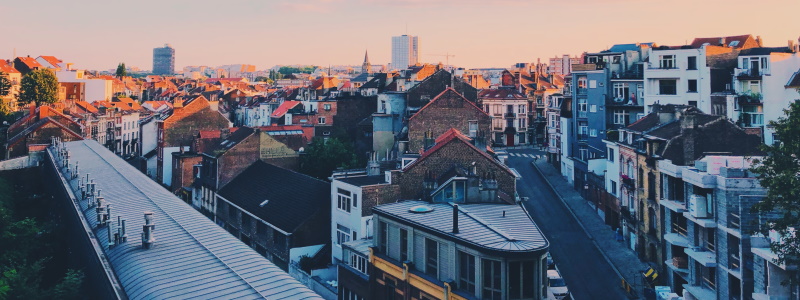
Brussels City
This area lies between the boulevards that surround the historic city centre. It's generally the place where visitors are taken to show off the best of Brussels. As a result of major renovation works, the downtown area has increasingly regained its charm for residents.
The Brussels city centre is marked by historic architecture such as the Grand Place, the Royal Palace, museums, charming squares and nightlife venues surrounding the Brussels Stock Exchange.
Traffic is a problem during peak times, lunch hours and weekend nights. Parking is also a concern for residents with a car, as garages and parking spaces are rare. This is the area for expat urbanites working downtown and is also popular with students attending a local university.
Etterbeek
Etterbeek incorporates the European district and the Jubelpark complex. This commune also includes the shopping districts of La Chasse, Tongerenstraat, Chez Antoine and Jourdanplein.
It's also more affordable than many other communes in Brussels, and it offers easy access to public transport. For expats working in the European Quarter who want to walk or take a short metro ride, Etterbeek is ideal. Commuting to international schools on the city's outskirts, however, will require a car.
Ixelles
With a multitude of theatres, cinemas, restaurants and shops, Ixelles is the place to be in uptown Brussels. It's made up of a mix of different neighbourhoods, offering a variety of choices for potential residents.
Expats can choose between charming upscale neighbourhoods around Place Brugmann and Place du Chatelain, the student area around the university, and art-deco homes around the ponds of Ixelles. Ixelles is also home to Place Eugene Flagey, with its famous cafés and buzzing sidewalk scene, and the chic shopping street, Avenue Louise. The Abbey de la Cambre is also found here.
Parking is always challenging as most of these neighbourhoods are popular shopping, dining and market destinations. Some apartments provide parking, and it's sometimes possible to park on the street during off-peak hours.
Many expat families live in these areas. It's not uncommon to see strollers parked outside of the neighbourhood restaurants. Central to downtown and the European Quarter, Ixelles is great for couples, singles or young families. The commute to international schools requires a car.
Woluwe-Saint-Pierre
A mainly residential, cosmopolitan commune, large amounts of green space are found in the parks and forests of Woluwe-Saint-Pierre. The Parc de Woluwe, the Mellaerts Ponds and the Zoniënwoud are wonderful places for relaxing outdoors. Housing here is a mix of apartments, townhouses and large homes, many with private gardens.
The Avenue de Tervueren is one of the main arteries in and out of Brussels and dissects the commune. Surrounding streets hide beautiful homes and commercial centres where families and young people alike can frequent shops, restaurants, hairdressers and a popular weekly market. The metro and tram also stop here, making it easily accessible to the rest of the city.
The commune authority itself is also well organised and accommodating to foreigners and new arrivals in Brussels.
Watermael-Boitsfort
Watermael-Boitsfort is in the south of Brussels and borders Ixelles. With easy access to the city, it has gradually become a highly sought-after residential area. More than half of the commune's territory is covered by the Zoniënwoud, while clusters of semi-rural housing, village houses and large villas give the commune a quaint charm. There's also easy access to the highway.
Expat Health Insurance
Cigna Global Health Insurance.
Medical insurance specifically designed for expats. With Cigna, you won't have to rely on foreign public health care systems, which may not meet your needs. Cigna allows you to speak to a doctor on demand, for consultations or instant advice, wherever you are in the world. They also offer full cancer care across all levels of cover, and settle the cost of treatments directly with the provider.

Moving Internationally?
International Movers. Get Quotes. Compare Prices.
Sirelo has a network of more than 500 international removal companies that can move your furniture and possessions to your new home. By filling in a form, you’ll get up to 5 quotes from recommended movers. This service is free of charge and will help you select an international moving company that suits your needs and budget.
Get your free no-obligation quotes from select removal companies now!