

- Download our Moving to Chile Guide (PDF)
Although there are many advantages to relocating to Chile, ease of banking and convenient financial services are unlikely to feature on that list. Handling banking, money and taxes in Chile is a complicated and often frustrating proposition. Expats may wish to seek advice from large accounting firms, tax specialists and relocation companies when starting to do business and dealing with money in Chile.
Money in Chile
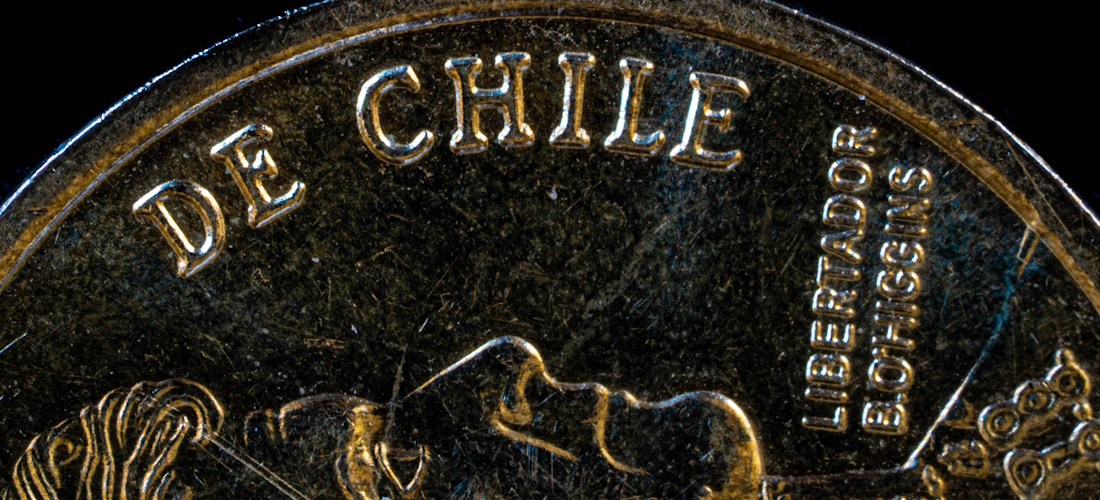
The currency used in Chile is the Chilean Peso (CLP) which is in theory subdivided into 100 centavos. Centavo coins are no longer in circulation, and due to inflation, prices are typically rounded to the nearest 10 pesos. CLP 1 and CLP 5 coins, although still in circulation, are no longer in production.
- Notes: CLP 1,000, 2,000, 5,000, 10,000 and 20,000
- Coins: CLP 1, 5, 10, 50, 100 and 500
Money matters can be tricky, especially when dealing with a foreign currency. The Chilean Peso has a floating exchange rate, and the currency can fluctuate. This can complicate currency conversions, but luckily there are many ways and places to do this. Money can be exchanged at airports, large hotels, ATMs and foreign exchange bureaux (casas de cambio). Expats should never exchange money with strangers on the street, as this exposes them to the risk of scams.
Expats will probably find the best rates for getting the local currency in Chile at ATMs or casas de cambio. Travellers’ cheques are often accepted at the casas de cambio, although the exchange rate is not in favour of the person exchanging money.
Expats are advised to carry cash with them, especially in smaller denominations, as change is difficult to come by outside of large cities and tourist areas.
Banking in Chile
The banking system and economy of Chile are relatively stable. Many Chilean banks operate internationally, and large foreign-owned international banks operate in the country. Major Chilean banks include Banco Santander-Chile, Banco de Chile, Banco del Estado de Chile and Itaú CorpBanca.
Of the foreign commercial banks, HSBC and Scotiabank have the largest presence in Chile, along with JPMorgan Chase. Expats can open an account with one of these before leaving home and then open a linked local account after arriving in Chile.
Banking hours are short, as Chilean banks are generally open from 9am to 2pm on weekdays only.
Opening a bank account
Opening a local bank account in Chile is extremely difficult. Many banks will only allow expats to open a local account once they've had Chilean residency for some time and even then, it isn't a straightforward process.
What complicates opening a current account (cuenta corriente) is all the requirements: a large income, a good credit history to prove that debts can be repaid, and a permanent contract proving that the person has worked and lived in Chile for several months.
An alternative is getting a CuentaRUT through Banco del Estado de Chile, which is a debit account allowing all basic payments and withdrawals. Setting it up is fairly simple and can be done online. That said, the account is limited by maximum deposit amounts and what expats can do with it. Expats will also need to have a valid Chilean ID card number and tax number (RUT).
Recently, Scotiabank has brought out another banking option for foreigners. Expats will be able to get a simple current account with a debit card provided they have proof of a minimum income. This will come in handy for making online payments, among other things.
We recommend that expats seek the help of banking relationship managers and advisors, although finding a good advisor may prove difficult. They are best acquired through networking. That said, this may be the best route, as many expats are hesitant to go through the bureaucratic nightmare of opening a local bank account alone, and the help of an experienced local advisor could ease the process considerably.
Alternatively, expats could have their salaries paid into their overseas bank accounts and access their money using foreign debit or credit cards. Expats who want to take this approach must ensure that they inform their bank before leaving home and that they take at least two or three working ATM cards with them to Chile in case of loss or damage.
Credit cards and ATMs
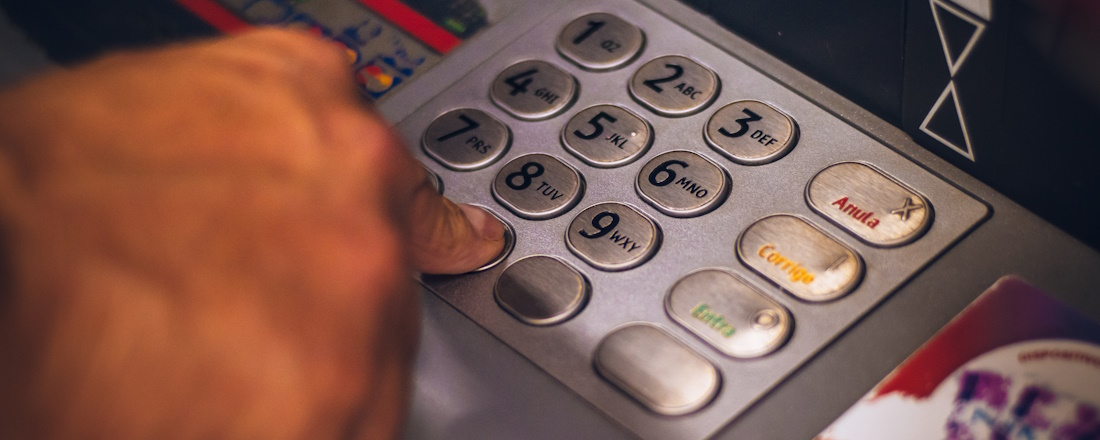
ATMs are widely available with multiple language options, even in the smallest Chilean towns. These typically operate on a 24-hour basis and accept all major bank cards. Credit cards are also widely accepted throughout Chile.
Although Visa, Mastercard and American Express cards are accepted, especially in large cities, fees for card payments can be charged at high rates. Expats should contact their bank to check their rates on ATM withdrawals and card payments, as there may be reduced rates available.
 Taxes in Chile
When moving to Chile, expats must get a Chilean tax number, the RUT (Rol Único Tributario). They do this when registering with Chile’s internal tax service, the Servicio de Impuestos Internos (SII). The process will be challenging for expats who do not speak Spanish, as the website and administration are largely in Spanish.
That said, networking and finding a suitable advisor and translator is helpful. Expats can also seek advice from large accounting firms such as KPMG for specific information.
In terms of tax, a foreigner is considered a resident if they have been living in Chile either for six consecutive months or more than six months in two consecutive financial years.
Expats will not usually be taxed on their worldwide income for the first three years that they are residents of Chile. However, they will be taxed on the income they earn from Chilean sources on a progressive scale from zero to 45 percent.
After three years of residency in Chile, expats are taxed on their worldwide income, but Chile has double-taxation avoidance agreements in place with many countries, so expats from these places will not be taxed on the same income twice.
When leaving Chile, expats do not have any formal requirements for tax compliance, so those staying short-term are unlikely to face setbacks.
*Tax regulations are subject to change at short notice, and expats are advised to seek the assistance and advice of a professional tax consultant.
Expat Health Insurance
Cigna Global Health Insurance.
Medical insurance specifically designed for expats. With Cigna, you won't have to rely on foreign public health care systems, which may not meet your needs. Cigna allows you to speak to a doctor on demand, for consultations or instant advice, wherever you are in the world. They also offer full cancer care across all levels of cover, and settle the cost of treatments directly with the provider.

Moving Internationally?
International Movers. Get Quotes. Compare Prices.
Sirelo has a network of more than 500 international removal companies that can move your furniture and possessions to your new home. By filling in a form, you’ll get up to 5 quotes from recommended movers. This service is free of charge and will help you select an international moving company that suits your needs and budget.
Get your free no-obligation quotes from select removal companies now!